What is Perineural Therapy (PIT)?
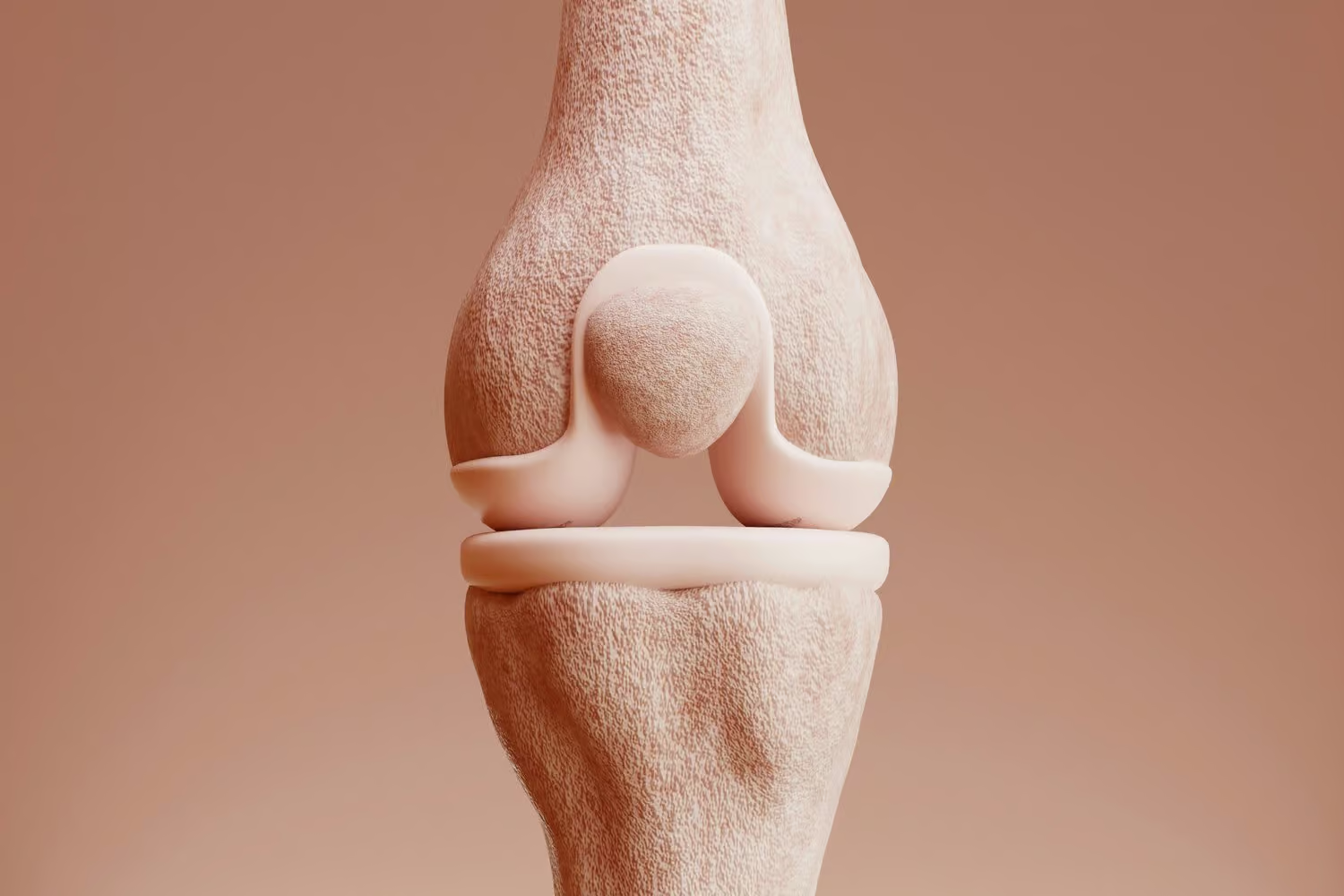
Implemented and popularized by John Lyftogt, MD, Perineural Injection Therapy (PIT) is a simple and highly effective treatment for pain that is neuropathic in origin. This safe therapy uses shallow injections near cutaneous nerves that extinguish neurogenic pain and neurogenic inflammation.
The results are remarkable: PIT resolves 80% to 100% of all pain that is neuropathic (neurogenic) or inflammatory in origin.
Understanding Neurogenic Pain
Neurogenic pain is caused by damage to the C-fibers of cutaneous nerves. These nerves are:
- Unmyelinated and about 1 micron in size
- Low conduction (they send slow signals compared to other nerves)
- Both afferent and efferent, which explains the complexity of neurogenic pain
C-fibers were discovered in the 1960s with the invention of the electron microscope, which allowed them to be visualized for the first time.
The TRPV1 Receptor: The Key to Pain
There is a receptor on these nerves called TRPV1 (transient receptor potential cation channel, subfamily V (vanilloid), member 1), whose previous name was the capsaicin receptor. TRPV1 is regarded as the central nerve receptor in initiating and maintaining pain-related behavior in animals and pain experience in humans. These receptors are responsible for the burning sensation often described in pain syndromes.
A Simple Experiment
For a direct experience of how TRPV1 receptors work: eat a hot chili pepper, then take a sip of a sugary drink and hold it in your mouth. You will find that the burning sensation is extinguished because the sugar changes the signal from the TRPV1 receptors in the nerves of your mouth. This is the same effect that happens with perineural therapy injections on neuropathic pain.
What Does TRPV1 Do?
TRPV1 is the principle mediator of:
- Tissue maintenance and renewal
- Inflammation and neuropathic pain
- Pain with disease and degeneration
TRPV1 receptors are activated by:
- Noxious stimuli
- High temperatures
- Pressure (greater than 30mm of Hg)
These stimuli cause the nerve to convey pain and inflammation messages to the central nervous system (CNS).
How Nerves Become Damaged
Cutaneous nerves pass through the fascia into the subcutaneous space from deeper tissue. It only takes pressure of 30mm Hg or greater to cause enough compression of the nerve to trigger pain. As the nerve passes through openings, it can become swollen if restricted.
Nerve compression and subsequent damage is called a chronic constriction injury (CCI). CCIs can be palpated and occur by:
- Restriction of the fascia
- Entrapment in fascial ligatures
- Entrapment in scar tissue creating a scar neuroma
Exercise causes nerves to swell and can cause them to become entrapped in these restricted areas. When a swollen nerve is restricted by a fascial opening, the myelin sheath and nerve can be stripped away with movement or stretching, causing an intussusception injury. This is very painful for the patient.
A Common Example: Low Back Pain
Low back pain is a common chronic constriction injury (CCI) and intussusception injury of the nerve. The patient with this type of nerve injury reports that their "back went out."
The typical medical scenario:
- Patient is diagnosed with a disc injury at L4-5 or L5-S1 (typical in people over 40 with this type of pain)
- Patient is prescribed bed rest, and the nerve swelling recedes
- When the nerve re-myelinates, the pain reduces
- When activity resumes and pain increases, surgery is recommended
PIT is a viable solution for patients with this type of pain cycle.
As the intussusception injury is repeated, the bunched-up nerve and sheath builds upon one or both sides of the tunnel and enlarges over time. Perineural therapy injections to the osteo-fibrous tunnel entrances and along the nerve course immediately relieve pain and improve range of motion. Patients are amazed by the sudden absence of pain with movements that were previously excruciating.
The Neurogenic Inflammatory Response
Neurogenic inflammatory signals and pain signals are sent by the release of:
- Calcitonin gene-related peptide (CGRP)
- Substance P (SP)
Key Physiological Effects of CGRP:
- Vasodilation: Increases blood flow to various organs and lowers blood pressure
- Migraine and Pain Modulation: Released during migraines, acting as a key neurotransmitter in pain transmission and neurogenic inflammation
- Cardioprotection: Protects cardiac tissue, reducing inflammation in cases of heart failure or ischemia
- Metabolism and Energy: Acts as an appetite suppressant, regulates temperature, and helps manage fat metabolism
- Bone Metabolism: Promotes bone formation and aids in fracture repair
The Documented Effects of Substance P:
- Pain Transmission: Released from sensory nerve terminals in response to noxious stimuli, contributing to pain perception and neurogenic inflammation
- Immune System Modulation: Mediates between the nervous and immune systems, regulating immune cell proliferation and cytokine production
- Inflammation and Vasodilation: A potent vasodilator that improves blood flow
- Wound Healing: Promotes tissue repair and wound healing
- Gastrointestinal Motility: Regulates immune, vascular, and motor functions throughout the intestines
- Cardiovascular Regulation: Involved in regulating heart rate and blood pressure
- CNS Effects: Involved in stress, anxiety, mood regulation, and the modulation of nausea
The Body's Healing Response
The same TRPV1 receptors in the C-fibers also send a healing signal through the release of somatostatin and galanin, which are anti-inflammatory and reverse the effects of CGRP and Substance P. This mechanism has not been studied as thoroughly as the effects of CGRP and SP, but it represents the body's natural healing pathway.
Genetic Factors in Chronic Pain
The TRPV1 receptor is actively being researched to understand its properties. In a recent German study, researchers found that TRP channel polymorphisms (variations in DNA sequences) contributed significantly to somatosensory abnormalities in neuropathic pain patients. The pain patients in the study had a much higher frequency of the polymorphism than healthy controls.
It is hypothesized that 20-40% of the population in the USA have these polymorphisms, which cause a slower healing response with the result being neurogenic pain and inflammation.
The Discovery of Perineural Therapy
Dr. Lyftogt first tried perineural injections on his own chronic pain from injury with so much success that he then treated his wife with the same results. One of the first patients he treated was a long-distance runner with debilitating Achilles tendonitis who wanted to continue training and running marathons. Dr. Lyftogt treated the lateral sural nerve and lower saphenous nerve where they cross over the Achilles tendon. The patient was immediately out of pain, confirming that the pain was neurogenic in origin.
Dr. Lyftogt learned that neurogenic inflammation can advance and worsen over time, so the sooner the original injury is treated, the fewer treatments are needed for complete healing.
What Can I Expect from a PIT Treatment?
Treatments are typically performed weekly for 4-8 sessions. A practitioner and patient can expect:
Initial Response:
- Complete relief of pain within 4 hours to 4 days
- Improvement in the pain scale (out of 10) each time pain returns after the initial relief
- With single-area pain syndromes, pain should resolve after 5-8 treatment sessions
During Treatment:There can be times when pain doesn't follow the direct descent mentioned above. This is not a sign of treatment ineffectiveness. In subsequent treatments, the descent on the pain scale will continue. Pain should not continue if the pain is neuropathic in origin and re-injury does not occur.
PIT as an Adjunctive to Acupuncture
There is both an art and science to using PIT, which is why it works beautifully as an adjunctive therapy to acupuncture, which also modulates the pain response. The combination of these two approaches addresses pain from multiple angles, providing comprehensive relief.
Growing Worldwide Acceptance
The science and technique of PIT is being taught all over the world, including:
- New Zealand
- United States
- Canada
- Mexico
- Italy
- Australia
- Netherlands
More than 400 doctors have been trained in this technique. PIT has the potential to become the standard treatment for pain syndromes in acupuncture clinics, physician offices, and emergency rooms.
Research Supporting PIT
Randomized Control Trials (RCTs) have been published on treatments for:
- Chronic low back pain (caudal epidurals)
- Achilles tendonitis
- Carpal tunnel syndrome
- Chronic knee pain
- Compartment syndrome
- Elbow and shoulder pain
Notable Results:A 3-year prospective case series on 201 cases of Achilles tendonitis showed a 92% success rate at 12-month follow-up.
Research is currently being undertaken in many countries to further validate and refine this approach.
Are There Side Effects?
The most commonly reported side effects are:
- Slight bruising
- Histamine welts (temporary)
- Allergy (extremely rare: 1 in 300,000 injections)
There are no reported effects of dependence on the treatment.
Is Perineural Therapy Right for You?
If you suffer from chronic pain that hasn't responded to conventional treatments, or if you're looking for a non-surgical alternative to address nerve-related pain, Perineural Injection Therapy may be an excellent option.
This safe, effective treatment addresses the root cause of neurogenic pain rather than masking symptoms. Combined with acupuncture and other integrative therapies, PIT offers a comprehensive approach to lasting pain relief.
Schedule a Consultation
Interested in learning whether Perineural Injection Therapy could help with your chronic pain? Schedule a complimentary 15-minute consultation to discuss your specific condition and treatment options.
Call: 720-226-7501
Email: deniseanlacom@gmail.com
Location: 1441 York Street, Suite 304, Denver, CO 80206
References
- Douglas Zochodne, A Definition of Neuropathic Pain, Calgary, Canada. Neurobiology of Peripheral Nerve Regeneration, Cambridge University Press 2008
- Szolcsanyi J. "Capsaicin-sensitive sensory nerve terminals with local and systemic efferent functions: facts and scopes of an unorthodox neuroregulatory mechanism." 1996. Chapter 20. Progress in Pain Research, Vol. 113
- Caterina MJ, Schumacher MA, Tominaga M, Rosen TA, Levine JD, Julius D. "The Capsaicin receptor: A heat-activated ion channel in the pain pathway." Nature 1997; 389:816-824
- Mosconi, T Kruger, L. "Fixed-diameter polyethylene cuffs applied to the rat sciatic nerve induce a painful neuropathy: ultra-structural morphometric analysis of axonal alterations." Pain 1996; 64(1): 37-57
- Bennett GJ, Xie YK. "A Peripheral mononeuropathy in rat that produces disorders of pain sensation like those seen in man." Pain 1988; 33:87-107
- Binder, Andreas, et al. "Transient Receptor Potential Channel Polymorphisms Are Associated with the Somatosensory Function in Neuropathic Pain Patients." PLoS One, March 2011, Vol 6, Issue 3, e17387
- American Neurologist Silas Weir Mitchell (1829-1914), Injuries of Nerves and Their Consequences (Philadelphia: J.B. Lippincott 1872)

Other Posts You May Like
Explore articles on acupuncture, herbal medicine, and wellness


Ready to Start Your Healing Journey?
Schedule a complimentary 15-minute consultation to discuss your health concerns and learn how integrative medicine can help.